 Finance operations
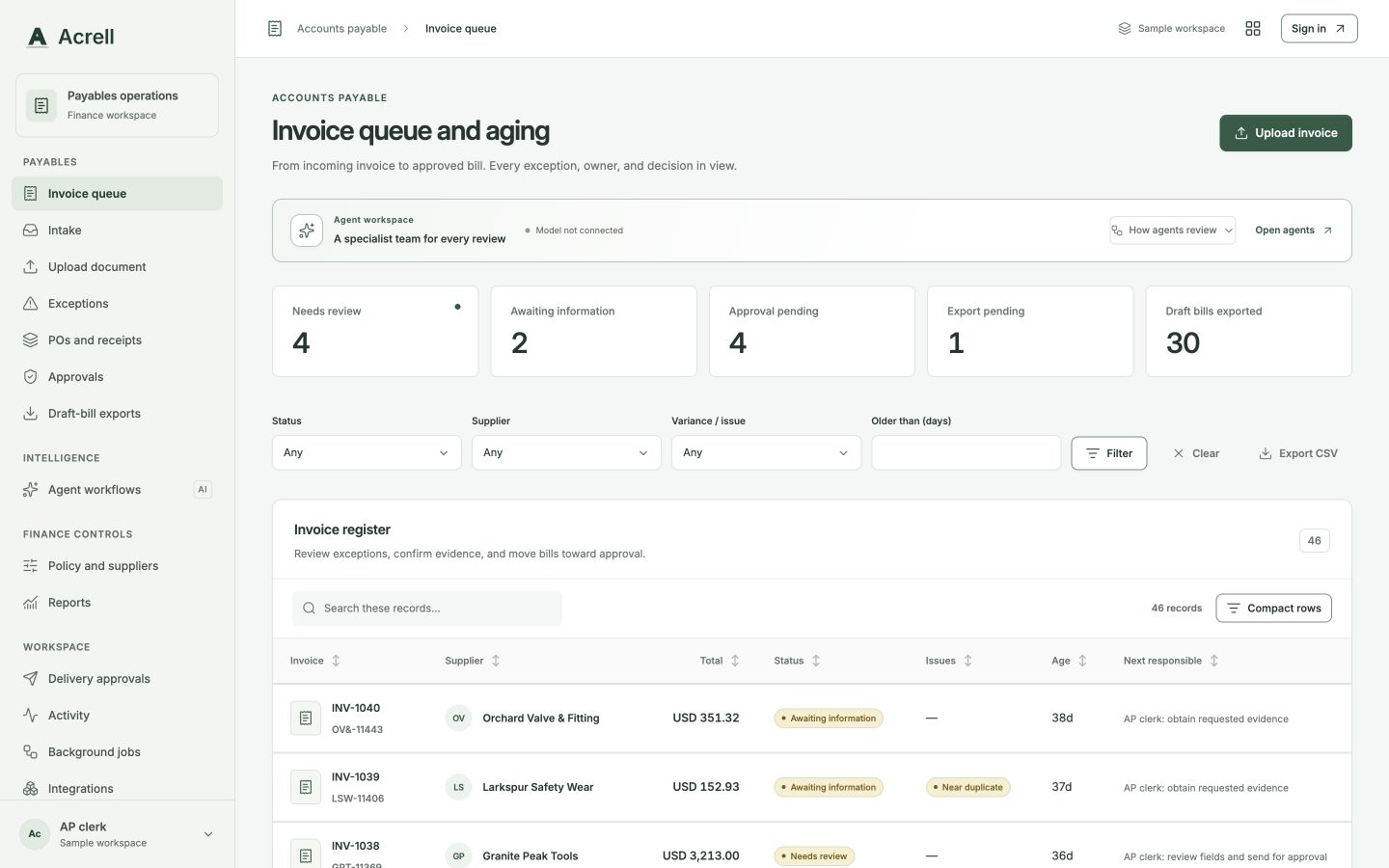
Interactive product showcase
Accounts payable, with a clear line of sight.
Bring invoices, purchase orders, receipts and review decisions into one controlled AP workspace.
3 sample scenarios · 4 specialist handoffsExplore product
Your team has better things to do than move information from one place to another.
We build practical AI systems that connect your tools, handle repetitive work, and keep your people in control.
For growing teams and mid-sized organizations.
Built around the tools
you already work with.*
The copied spreadsheet. The unanswered inquiry. The invoice waiting for a second check. We turn these everyday bottlenecks into connected, reviewable workflows.
Meet your operations partnerFrom the first process map to the everyday running of your workflow. We make the whole thing work together.
Connect your tools and remove repetitive handoffs, with clear rules and a route for exceptions.
Turn unstructured information into useful drafts and decisions your team can inspect.
Keep workflows observable, train the team, and improve them against real operating data.
Not sure where to start? Begin with workflow discovery
Explore the interfaces, inspect sample records, and follow the decisions behind the workflow.
Finance operationsBring invoices, purchase orders, receipts and review decisions into one controlled AP workspace.
 Ecommerce operations
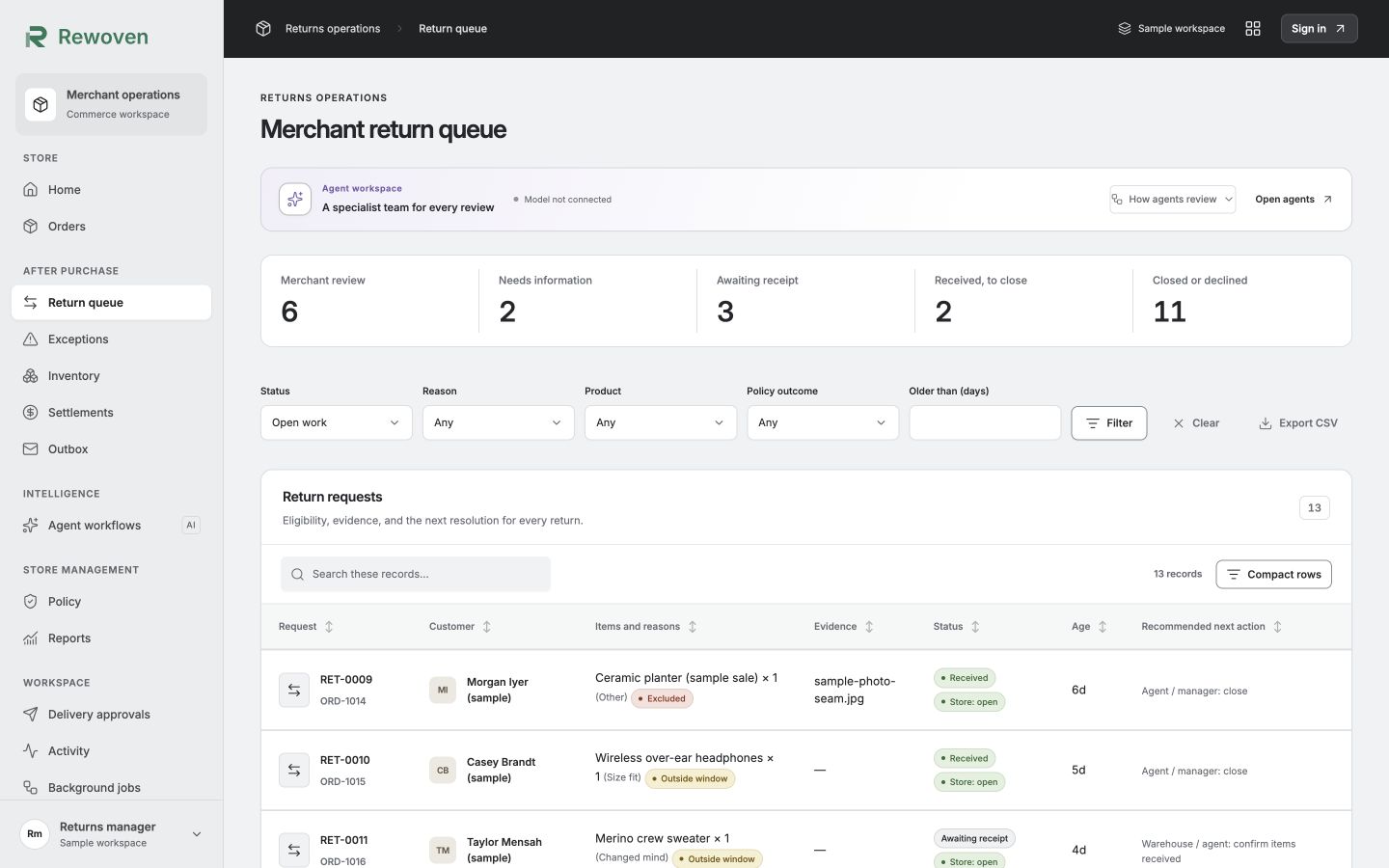
A merchant workspace for eligibility, evidence, customer responses and the decisions behind every return.
 B2B SaaS support
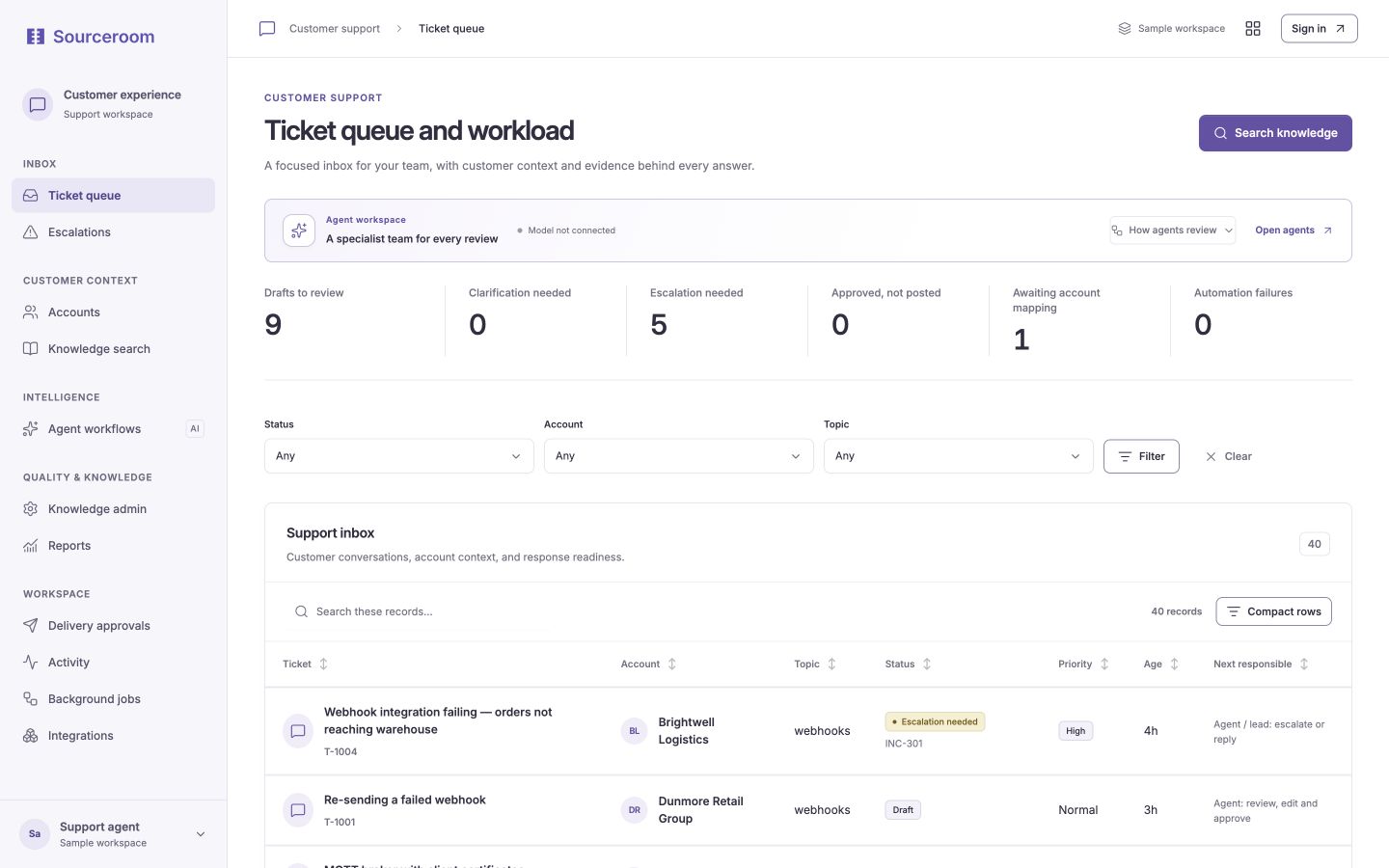
Account context, authorized knowledge and human review for support teams that need answers they can trace.
 Property operations

Coordinate resident requests, safety escalation, vendor evidence, access and owner approvals in one place.
 Logistics operations
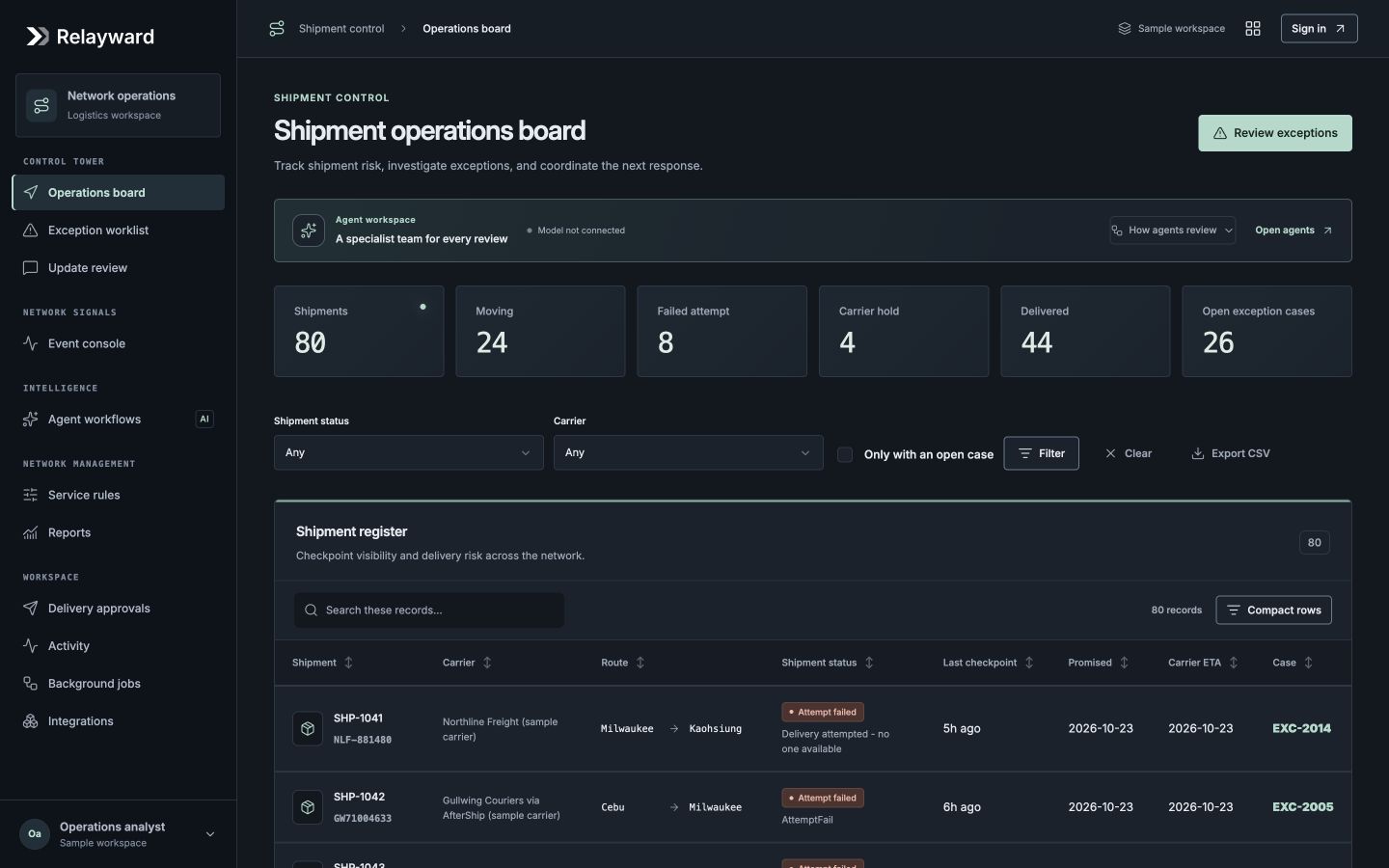
Turn fragmented carrier events into an owned exception queue with evidence, next actions and controlled updates.
Working product implementations, presented with fictional business records. These are product case studies, not client results. Website walkthroughs use authored sample outputs.
Explore all projectsA clear path from operational friction to a system your team can rely on.
Map the real workflow. Measure the current effort and identify one useful place to start.
Output / A clear business caseConnect the right systems. Define the rules, review steps, and failure behavior.
Output / A controlled pilotTest against representative work. Start with human review and measure the difference.
Output / An evidence-led rolloutTrain your team, document the system, and agree how it will be operated and improved.
Output / A system you can ownWe design for the exception, the missing field, and the moment a person needs to step in. That’s where useful automation becomes dependable.
Explore the capacity a workflow could release. Adjust the volume, review time, and ongoing costs before you invest.
A few useful ideas for making automation work in an actual business.
A practical scorecard for identifying a workflow worth improving, before investing in a build.
Read the field noteModel useful capacity, review effort, operating costs, and payback without confusing an estimate with a guaranteed return.
Read the field noteDesign review around authority, evidence, and changing source data—not a decorative approve button.
Read the field noteUseful automation starts with a clear conversation about your business.
Start with one recurring workflow that has a clear owner, reliable source data, measurable volume, and a safe review path. Discovery compares the options and checks whether your existing software can already solve the problem.
The starting point is your existing CRM, ERP, help desk, accounting system, or shared inbox. We verify API access, supported imports, permissions, and platform limits during discovery before committing to an integration. Tool names on this site are illustrative, not partnership claims.
Timing depends on workflow scope, data quality, integration access, and review requirements. Discovery produces a specific delivery plan with milestones and decision gates. We do not promise a fixed implementation time before assessing those dependencies.
Discovery is scoped as a defined engagement. Implementation and ongoing support are quoted separately, with third-party platform and model costs made visible. The business case is agreed before a build; there are no invented package prices or guaranteed returns.
Uncertain or unsupported output goes to a person. The design includes validation, evidence, bounded retries, monitoring, and a manual fallback. Consequential actions have explicit permissions and approval requirements.
The engagement is designed for client-owned accounts, source/configuration, documentation, and operating access. Ownership, third-party licensing, and support responsibilities are confirmed in the signed agreement.
*Technology names illustrate possible integration options. Feasibility depends on your platform, plan, API access, and scope. No partnership or endorsement is implied.
Tell us where the work gets stuck. We’ll help define a worthwhile first step.
Plan your first automation